
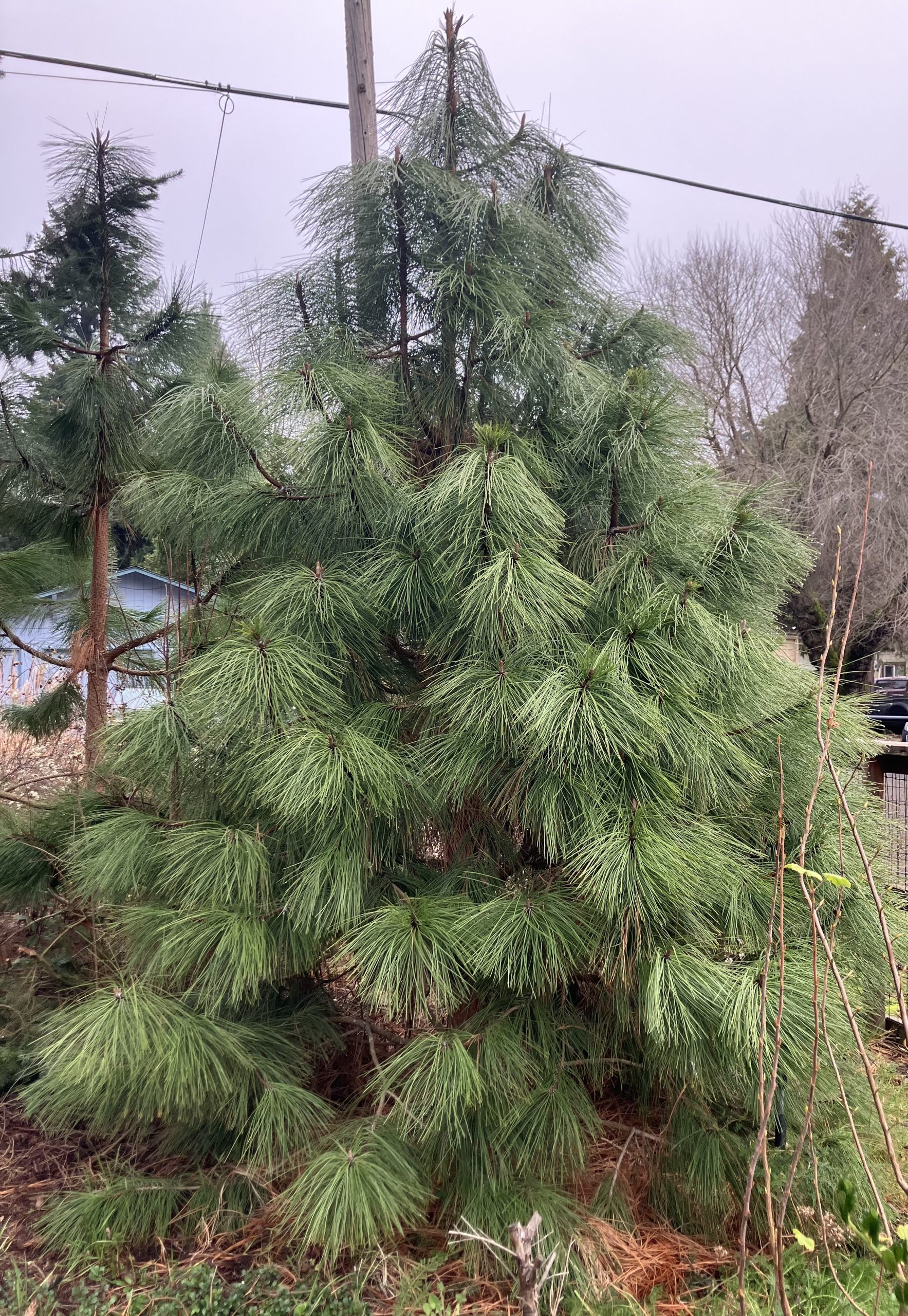

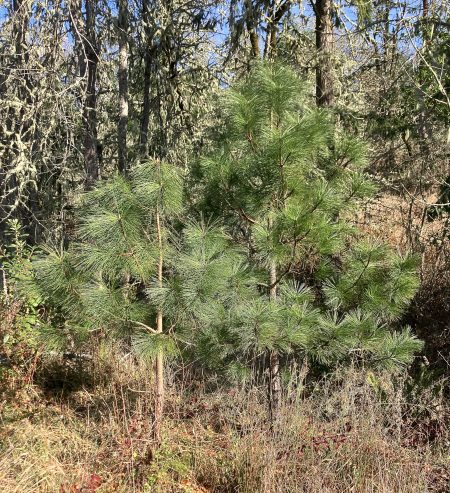
“Rise and shine!” I call to my teenage son, and Willamette Valley Ponderosa Pines comes to mind, rising taller than their near companions, shining in the rare January sunlight—just like my child coming into his own. Young and robust, a beacon of vigor in the winter landscape, the Pines planted along the freeway verge a few years ago have already changed the site from one of neglect to that of an emerging ecology, a forest, a habitat.
It was only a few decades ago that the collaborative work of conservationists and lumbermen brought this valley endemic variant of Ponderosa Pine back from the brink of decimation. Thousands of years of evolution in place, alongside the late summer cultural fires of Native Kalapuyans that left the fire-resistant pines standing, was nearly lost. Softer, easier to mill than hardwoods, and abundant on the valley floor, early settlers over-harvested the trees to build homes and clear land for crops and livestock. From the few remaining stands, we thankfully now have nursery stock available to plant in parks, public lands, and even in your own garden.
Unlike the more widely known eastern Ponderosa, adapted to thin, dry soils, the Willamette Valley trees thrive on the same ground we inhabit—winter wet, summer dry lowlands of the heavily populated valley floor.

One of the first I came to know well was a towering presence in the small backyard of an early client who lived in southeast Eugene near Amazon Creek. Garden making there was a quick education in clay-tolerant plants and those that could withstand a high water table. I’d look up at the mature Ponderosa, recall my college days amongst it’s kin in the high desert of Prescott, Arizona, and wonder how this one grew so shining and vibrant from anaerobic ground.
Not only a spectacle of wonder for its adaptability, that Willamette Valley Ponderosa Pine was also always alive with winged visitors. From the skylight inside, you could look up to see the highest green branches bend under the weight of crow and flicker. In fact, Ponderosas are a keystone species, supporting such a significant diversity of other lives that they effectively hold their ecosystem together. When settlers heavily logged the Valley Pine in the mid-1800’s, Lewis’ woodpecker and the slender-billed nuthatch, which both nest in the tree and rely on it for food, declined along with it.
You can change that pattern of decline.
Maybe you seek privacy in your yard from a rowdy neighbor like Stacy did when she moved to her charming house in North Eugene. You might be swayed to plant Leyland cypress. It’s always available in the big box stores. Does it offer anything to wildlife? No, no it does not. No food for caterpillars or birds, no pollen for bees, nada, nothing. And, it’s so fast growing—massively wide, as well as tall—that it quickly outgrows its place and requires removal or awkward pruning at great expense. Leyland cypress are the disposable, silent spring* of the nursery industry.
Willamette Valley Ponderosa Pine (Pinus ponderosa var. willamettensis) is the locally adapted evergreen screening tree for you who care about habitat, ease of maintenance, sense of place, and long term resilience. Seek out a native plant nursery like Doak Creek or Seven Oaks and choose a few Valley Pines instead of Leyland cypress. (Make sure your trees are from the Willamette Valley and not shipped over from east of Cascades—those won’t thrive here.) Perhaps, like Stacy, you pair your young pines with snowberry, ocean spray, and western mock orange to layer the screening and add more to look at, more to enhance the liveliest version of your garden.
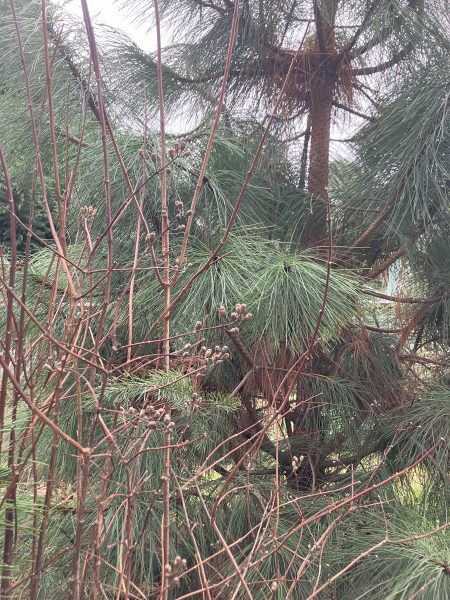

When I visited Stacy recently, she told me how the Willamette Valley Ponderosas are one her favorites from the planting we installed in 2020. She admires how the two trees have unique personalities—one grows chubby and full, with closely set branches, the other is avant-garde, dancing it’s limbs in an open gesture to reveal patterned bark. Both, though, have put on significant growth in the few short years since planting and are effectively screening the neighbor’s scene. I was compelled by their healthy gloss to take off my glove and feel the smooth cluster of needles—absolutely lovely.


Stacy hopes her trees can tolerate the hotter, drier summers we’re experiencing with climate change. I’m confident they can. Willamette Valley Ponderosa Pines grow a deep taproot, anchoring them in winter-wet ground, and nourishing them through summer drought. The trees are fire resistant, too, though you don’t want to plant them close to your home. The dry needle debris could catch a spark.
When you choose to plant keystone species like Willamette Valley Ponderosa Pine in your garden, you contribute to the re-establishment of our locally adapted ecosystems. Imagine witnessing the flourishing of beneficial insects, butterflies, and all the insect-gleaning birds right out your door from the simple, yet generous act of planting this tree.
*Thank you Stacy for sharing this idea that commonly available, non-native nursery plants effect the decline of songbirds as much as the pesticides that inspired Rachel Carson’s iconic book Silent Spring.
THANK YOU for the timely, informative article.
I wish I had room in my yard for this tree. It is beautiful. I am so glad to learn that it is being planted in the area.
You’re welcome! I’m glad you enjoyed it.
I wish I had room too! I keep eyeing a big old buddleia near my office. Maybe this spring I could finally root it out and replace it with a Valley Ponderosa!