
I cried at the credit union. It was the day after the election and the teller asked how my day was going. “Honestly, I’m feeling pretty sad.” Acknowledging it opened a small flood that I saw mirrored in her face.
Breathing deeply on the drive home, I continued to grieve.
Stepping out of my car in front of my house, a small shift happened.
It came through the doorway of my eyes again, those portals that express out to the world (tears, love, sympathy) and, also, allow the world’s expressions to enter in.
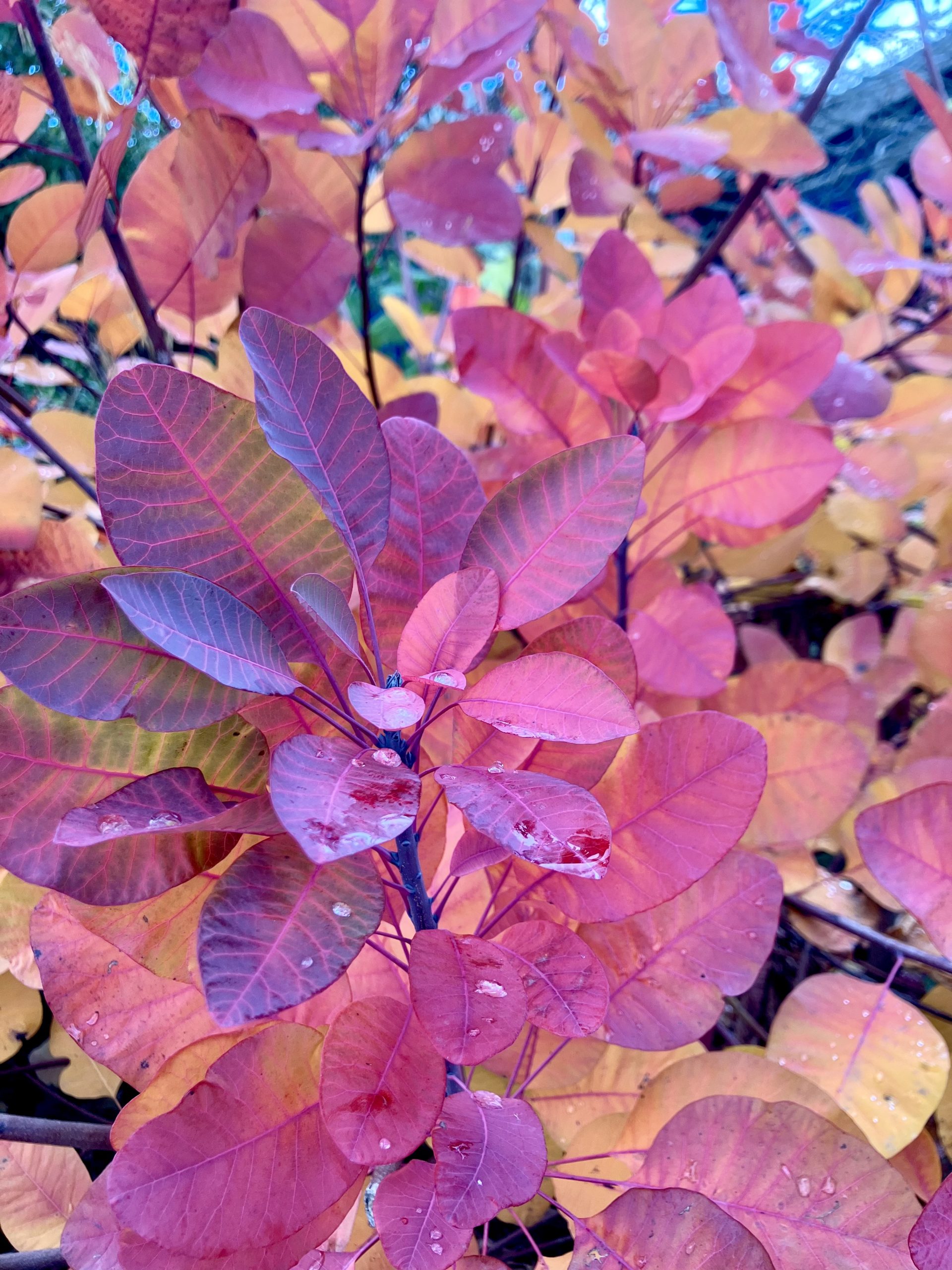
It came smoldering. It came aglow, aflutter, alive in the light, the wind.
Grace smokebush by name. Or Cotinus ‘Grace’ if you prefer the specificity of botanical Latin. Now is her most radiant season. Perfectly timed for post-election grief, and/or Thanksgiving celebration. Or for birthdays of fiery Sagittarians like myself.
I paused to take in the radiance, to appreciate the beauty of fall color, to let it wash over me like a healing balm. Each flicker of rosy leaf mended my heartache. The color, lit through by the sun, was sensory medicine, was a visual reminder of joy, of love, of determined hope for beauty in the world.
And so, I offer you this one small thing, as November’s plant of the month, in hopes that it will bring a rising of joy for you, too.

Grace smokebush is a great big shrub. I like its form best when it’s coppiced yearly. Prune it down cleanly, to three or four feet, in February or March, like you would for a hybrid tea rose. The brief loss of limbs is quickly replaced with fat, vertical shoots dressed in plummy, oval leaves.
If deer frequent your garden and you want some reliable color, this is your friend indeed.
It’s also nice in a drought-adapted mixed hedge where it contributes it’s rare colors to an otherwise green scene.
Grace smokebush is not like most of those I highlight. She’s a hybrid of two Eurasian species, not an Oregon native plant. But that feels fitting too, in a way, for this political climate we’re in.
Why? In some native plant forums, there’s a strict dogmatism that I’ve never felt comfortable with. You might come to believe that any non-native plant is invasive, coming to take over from those that are rightfully here.
The language mirrors the anti-immigrant hate speech that we hear leaking into all political discourse lately.
Rebecca McKakin, ecological horticulturist of TED talk fame, chooses to use the term “plants that cause ecological damage” instead of “invasive” to clarify that not all exotic species deserve vilification.
Plants that are well-adapted to your local climate, that contribute joy, beauty, structure, that recall memories of grandma, or that you can eat, or make art from, can have a place in your habitat garden. As long as they’re not causing ecological damage by seeding into the wild and disrupting the balance, there’s no need to feel ashamed of loving them.
And, I do love Grace smokebush in the autumn garden. She looks gorgeous alongside natives like tall Oregon grape (Mahonia aquifolium) and Nootka rose (Rosa nootkana).
Two-thirds for the birds or 70% native is a great guide that allows for inclusiveness alongside care and protection of local biodiversity.

The teller at the credit union wasn’t just doing her job, tracking the transaction of money, she was also an empathetic person, caring about the one in front of her. I hope such kindness continues to counter the recent election results.
When kindness is lacking and the news of the world is too much, let the beauty of your garden heal your tender heart. Maybe it’s the brilliant colors of Grace smokebush, maybe it’s the rain sliding down your windowpane, or cedar waxwings feasting on rosehips. Whatever it is, take it in, let it anchor you. The world is still full of wonder.
Thank you, Leslie! I’m trying to re-establish my deep, necessary bond with the natural world.. Would a “Grace Smokebush” fit under a front window with western exposure?