
When my mom tells me that my favorite thing to draw as a little girl was rainbows, it sounds right. I do love color. All of it. Still.
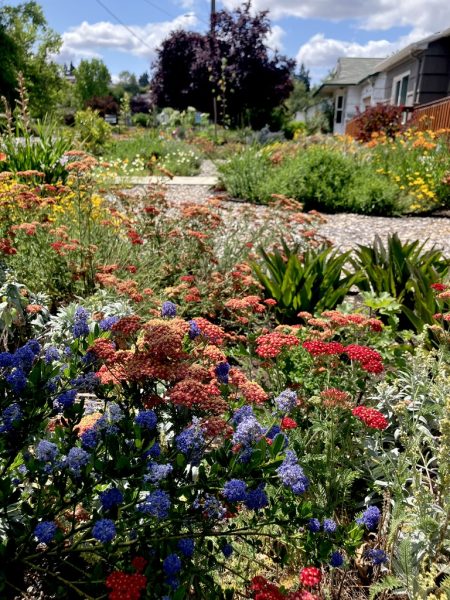
Looking at photos of past Junes to choose a plant of the month, I was confronted with an array of rainbow colors. This is a peak month for so many rambunctious flowers. Flowering gardens are overflowing with heaps of stems bent heavy with yarrow heads. Blanket flower and Oregon sunshine swish their sunny blooms this way and that. Spiky sea holly colors up metallic blue this month and California poppies are off the charts with their golden-orange cups. Fireweed, prunella, fleabane, gillia, baptisia, so many different alliums, ceanothus, columbines, veronica, roses!
So, this month, instead of highlighting one plant, I offer you the rainbow. I’d like to suggest that your garden be a place where all belong.
Around town, I see green images of the Statue of Liberty with her torch raised high above bold font: We All Belong. The artwork has been wheat-pasted on guard rails, street lamps, and an arbor post at the rose garden.

I think of my neighbor of over twenty years who moved to live with her relatives in Mexico. She didn’t feel like she belonged any more.
I think of friends with trans kids who worry through the nights about their family’s future. They’re getting a message that they don’t belong either.
I turn to the solace of the gardening world and I see some disturbingly similar messaging about who belongs and who doesn’t. And I don’t want any part of it.
In the realm of gardening for birds and pollinators, there’s a fabulous push to cultivate locally adapted native plants. This, I do wholeheartedly support. For so many reasons. We know we can make a significant difference for the continued thriving of all the small creatures when we plant natives. And, gosh, there’s some beautiful plants to choose from. Plants that give a garden a sense of place, that look like Oregon (or wherever you’re from) rather than England, the horticultural monarch of generations.
And, there’s more to the rainbow that also belongs in your garden without shame. I know you have plants that you just adore. They call to you by their beauty, their color, they way they remind you of a loved one, or their scent that changes your mood on a gloomy day. Maybe you’re like me and you crave all the colors, rich and jewel-toned, soft and ethereal, themed or riotous.
Please don’t be ashamed to love what you love. Exclusivity is the realm of fascist billionaires. If it means you’ll get out and be immersed in the nature of your garden more often, that you’ll tend it and celebrate its life, plant those non-native darlings.
And plant natives. Both / and. Which is a world of difference from either / or. Both / and opens the doors to combinations never seen before. It’s a stance that welcomes diversity, the rainbow, everyone.
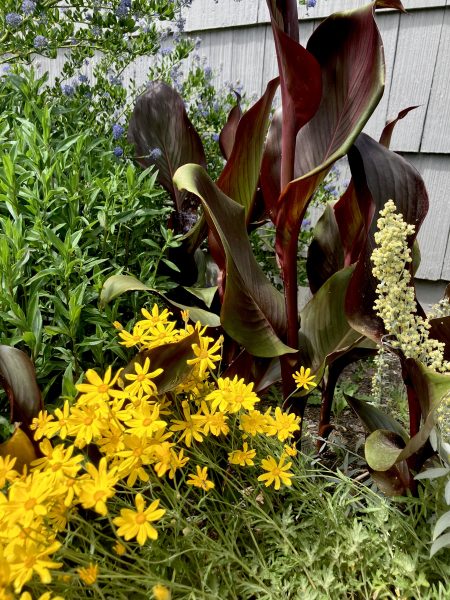
Oregon sunshine (Eriophyllum lanatum) stretches up it’s pollinator-laden blooms on silvered stems supported by the deep plum of canna (Canna ‘Tropicana Black’). The two are joined by a native cultivar (aka nativar) of our western mugwort (Artemisia ludoviciana ‘Valerie Finnis’). Pacific aster (Symphyotrichum chilense) romps mightily nearby, withholding their blooms until later in the summer. And, ‘Victoria’ California lilac (Ceanothus ‘Victoria’), also a nativar stands shrubby and evergreen, shouldering up against the canna.
This is one example of a novel plant community that emphasizes native plants and welcomes both nativars and a favorite non-native. Isn’t it fabulous!?
What unique combinations can you create when you start with habitat-providing natives and expand to include the rainbow?
A garden where all belong can be a new form of resistance against fascism, a celebration of the diversity that makes life magic, a personal expression, and a refuge for pollinators and birds.
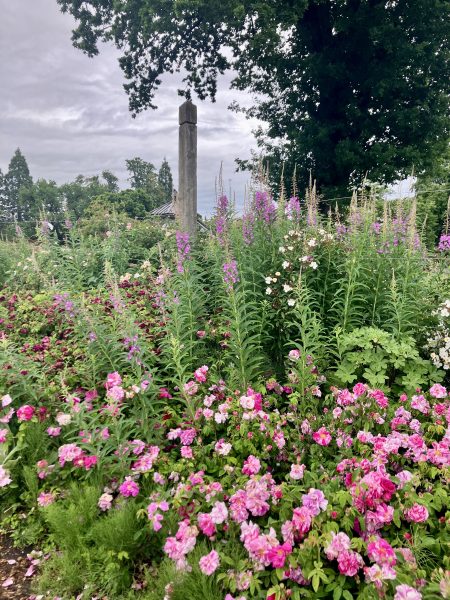
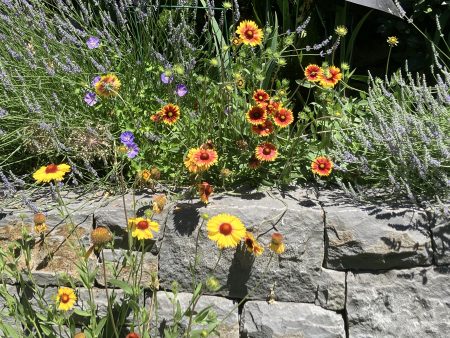
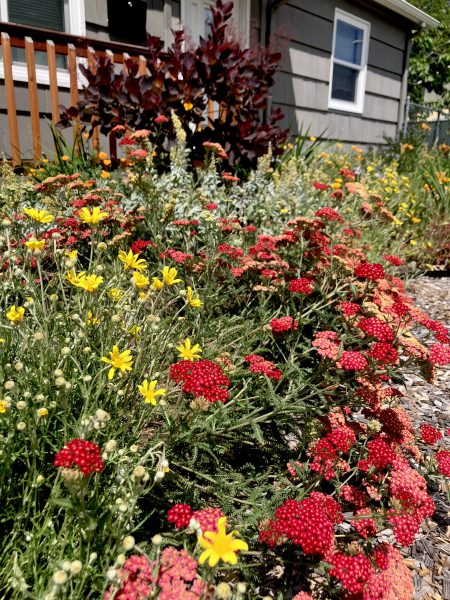
Here’s a few more examples of June blooming, inclusive gardens:


Beautiful and beautiful words..Thank you❤️
I agree with this! Natives and non-native plants are great friends. If only we could make America kind again and find common cause together, co-exist like the lavender with the columbine.
I agree with your article; native and exotic plants make great companions.