She wondered if the vine maple was dying. I rubbed the crisp, brown leaves away to reveal plump, lively buds. Fall in the Willamette Valley is brown and blonde, spiderwebs jeweled with dew, lichen-draped, and thirsty for rains. Our native plants are tired from the long, dry summer. Vine maples, which color vividly in the high Cascades, are less reliably red here.
Strictly native Oregon habitat gardens can look long-in-the tooth, downtrodden and lonely, ragged and tired in October. Yes, there’s the deservedly famous Douglas aster, pumping out purple, pollen-laden blooms. Those of you with small gardens, though, tend to shy away from this wildflower’s rambunctious will to spread by rhizome and seed.
If you’re goal is to create habitat and beauty, if you wrinkle your nose at brown or powdery mildew as a version of fall color, I give you permission to include non-natives in your garden without shame.
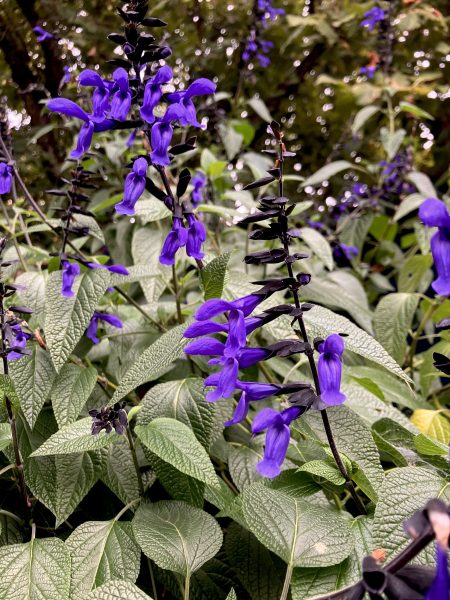
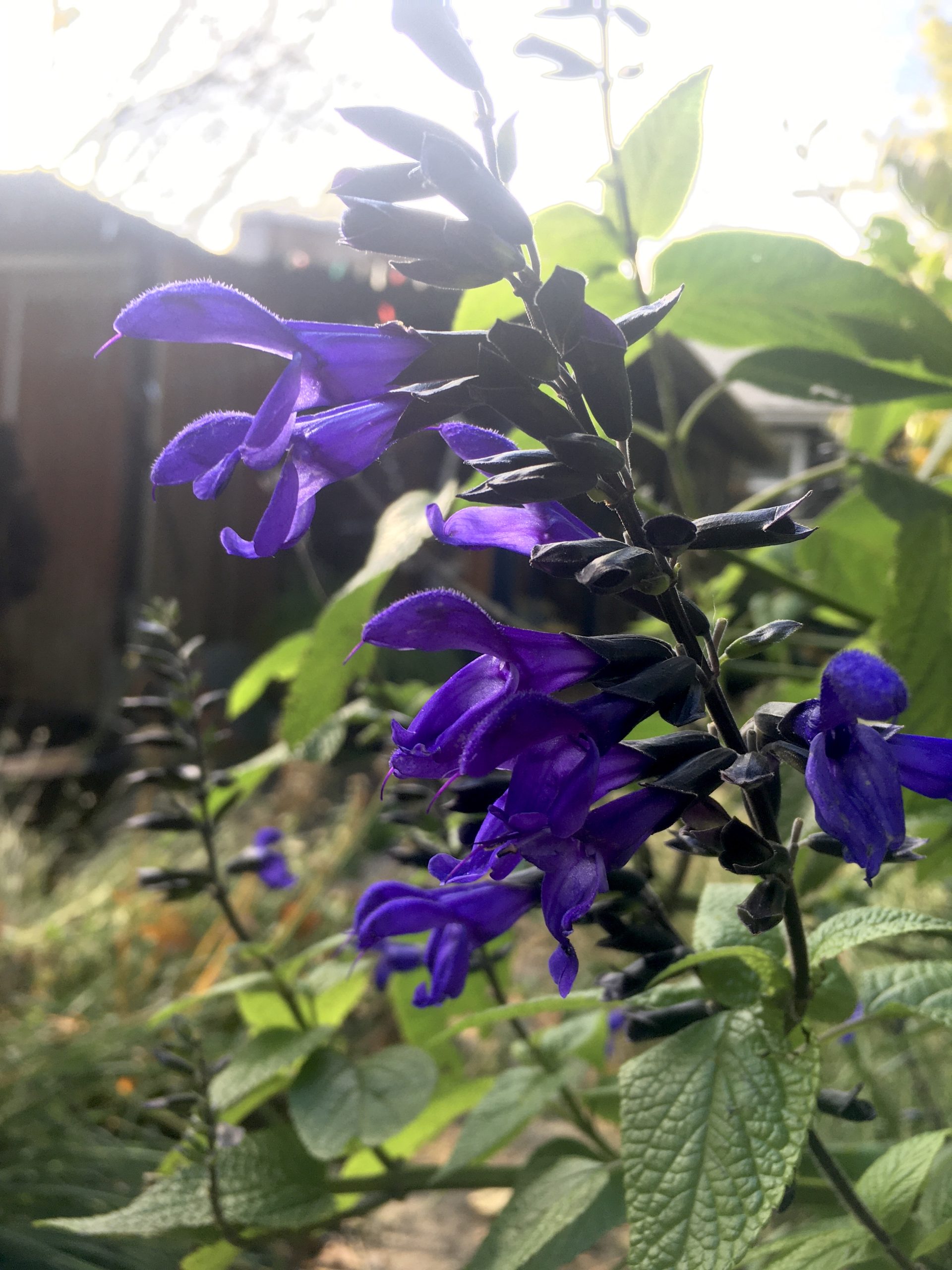
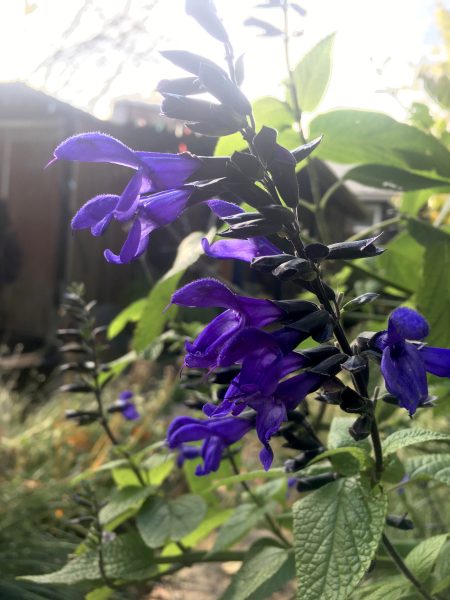
This month, I want to share with you a stalwart perennial that carries the garden through the fall. Black and blue salvia (Salvia guaranitica ‘Black and Blue’) has been a staple in my planting designs for over twenty years. I still stop in wonder when I come upon one in full-throated bloom. And I’m not alone. As we saw in our recently installed Tudor Cottage Garden, black and blue salvia draws buzzing and clicking hummingbirds a soon as they’re planted.
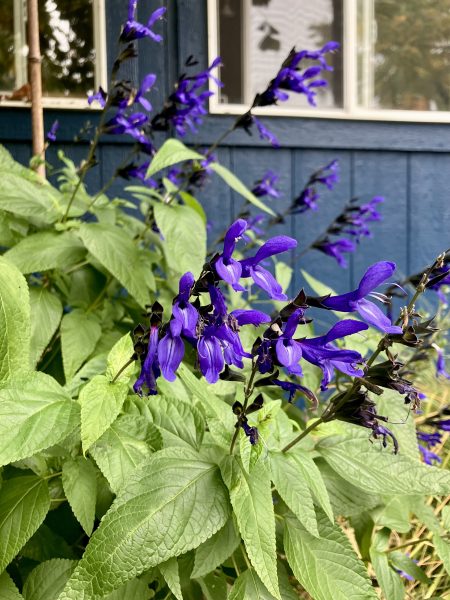
Named for the sleek black sheaths that split to release large, cobalt blue blooms, this salvia is indeed a bruiser. Further south, gardeners enjoy a slew of different salvias. California is rich in native species. For us in the Willamette Valley, though, most of those don’t live long. Our winters are just a bit too cold and quite a bit too wet for most of them. Of the hardy species, black and blue is the largest and the most reliable for October blooms.
The plants are husky, growing to four or even five feet tall and wide. They feel more like a shrub than your typical flowering perennial. The healthy green leaves have personality, too, with veins like valleys patterning the textured surface. Rub against them in passing and a pleasant herbal aroma lingers on your sleeve.
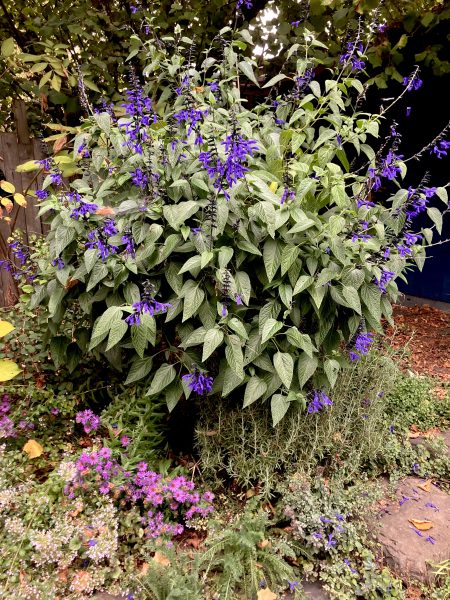
An old black and blue towers at the back of my meadow garden. Overhead, the squirrel-planted hazel tree on the fenceline grows larger every year, casting more shade over the flowers below. The salvia responds with deeper green leaves, taller shoots, and a lean into the light. This year, I pushed three long bamboo stakes around her and tied them high over the emerging spring shoots to make a tripod. It looked pretty in the spring, a sculptural structure when all was small. Now, the bamboo is completely cloaked in green and black and blue. The tripod provides a sturdy framework to corset the lean and keep her perky and upright.
The shade doesn’t deter black and blue salvia from blooming. In fact, I think she looks richer and healthier for it. Nearby, shade-loving snowberries bobble their white fruit and make an unexpected fall combo with the blue flowers. I love it. This is the kind of thing that makes me smile and forget the stress of the day.