
In Heather’s kitchen, around plates of rice crackers and hummus, homemade chocolates and Best Day NA beer, the talk turned to Spanish bluebells. I held my tongue and listened, nodding along with Shannon’s heartache after digging and digging last year only to see just as many return this spring. Ryan would love to do something with the bed where the birch trees died, but it’s full of bluebells and so he feels stuck. I compliment him on the snowberry growing there and he says yes, and the meadow rue, too. Ah, but the bluebells are so hard to grow much else with. Their long leaves turn to mush and smother anything trying to give it a go. In a small, hopeful voice Beth says, “But, at least they’re pretty. And sometimes white, too!” Eye rolls from those who have fought those pretty beasts and acknowledgment from those who haven’t follow her well-meaning remark. I respect the positive re-framing. It’s often the best we can do to not feel trapped in gardener’s despair.

The one thing missing from this conversation, and I failed to bring it up, maybe because the conversation shifted, maybe because I didn’t want to go off like the nature nerd that I am, is Spanish bluebells’ lack of ecological associations. By this I mean, it feeds no one. No bees, birds, butterflies, no deer, squirrels, voles, no chubby fingered toddler children, no one eats this plant’s pollen, nectar, leaves, nor bulbs. Why does this matter?
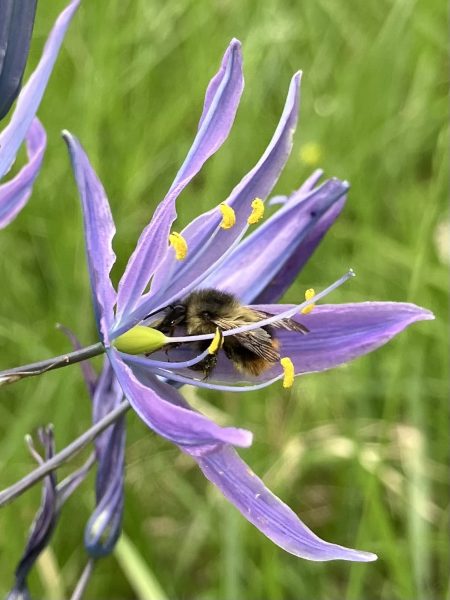
To eat and be eaten is how we know the interconnection of life. If our gardens are full of pretty plants, but no winged visitors, no dynamic interchange between plant and animal kingdoms, an underlying sadness shadows the scene. Something is lacking and we feel it even if we can’t name it. Aesthetics are important for engaging our predominant sense of sight, yes, and those aesthetics can expand in delight and significance when accompanied by the unexpected visitor; the bumblebee fat and furry clinging with delicate feet to silky petal edge, the vibrating throat of house finch singing from twiggy perch, the sidewalk passerby who stops to gawk as hummingbird hovers and dips for floral nectar.
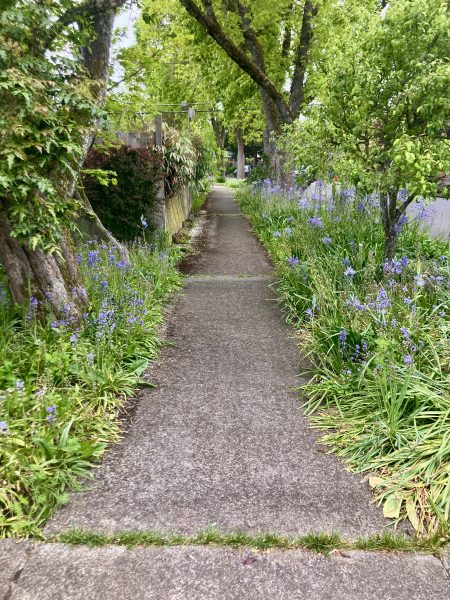
I have a neighbor who’s garden I admire. Walking past her place over the last twenty years, I’ve watched her hellstrip planting evolve. The old dwarf apple trees are now accompanied with natives: red-flowering currant, ceanothus, and an impressively increasing May display of pale blue camas. Like so many Pacific Northwest yards, Spanish bluebells are here too. But, what I’ve noticed, and what I want you to learn along with me, is that the camas she planted appears to be out-competing the bluebells. It’s the larger of our two native species of camas, Camassia liechtlinii, also known as greater camas. With its lush leafiness and heights exceeding that of the bluebells, the camas is just that much more vigorous, with a phenological timing to stay one or two strides ahead of the weedy bluebells.
I imagine, too, that there’s an advantage below ground. If you’ve ever dug bluebells, you know that their weird little bulbs are nearly as countless as grains of sand. But, they’re relatively small, little knuckle bones and bits. Camas bulbs grow as large as small potatoes. Are they deeper, too, occupying a different layer in the ground than the bluebells? How deep does the traditional Kalapuyan digging stick pry to unearth the main foodstuff of this land?
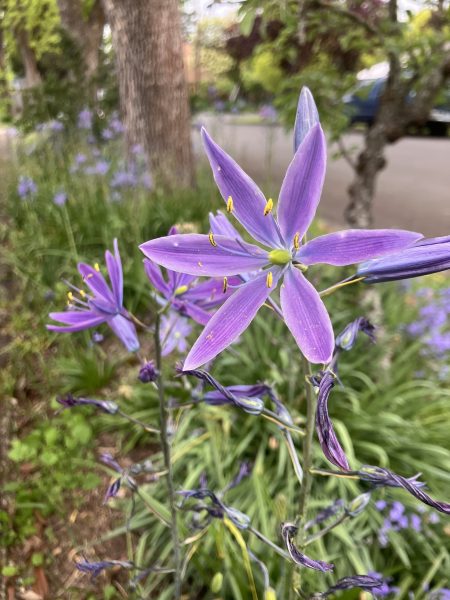
I’m not suggesting that planting greater camas will be the end of Spanish bluebells in your garden. No, you’ll likely always have them. The mental re-frame that my friend Beth initiated when she admired the cottage-y charm of bluebells can expand when we discover plants that coexist with them. Remove what you can, deadhead them so they don’t spread further by seeds, and plant amongst them. Greater camas in the mix will thrive and spread over time. And, importantly, its presence will enliven your garden with pollinator’s activity.

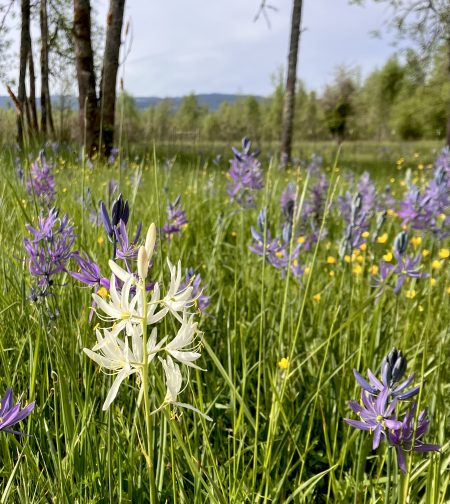
The Willamette Valley and further north reaches of the Pacific Northwest hold an innate solution to right the balance. If you’ve seen the pools of blue flowering within the green grasses alongside I-5, imagine what the whole valley floor looked like before colonization. Can you picture it? An endless grassy sea of blue camas, gold buttercup, rosy checkermallow, antlered elk, toothy beaver, muscular oak.
Red-tail hawks perched on livestock fences turn their backs to grazed pastures. Their gaze is tied to the spirit of this place rising from wild roadside verges, to camas stars alive with pollen-dusted bees.